





General videos
23.2%10,909.6 hours
Panda-70M · OpenVid
Diverse scenes, objects, and visual dynamics broaden language–video experience beyond manipulation demonstrations.
World action models jointly predict video and actions conditioned on language. Existing studies focus primarily on architectures and training mechanisms, typically treating language–video alignment acquired through video pretraining as an established foundation. However, introducing action learning may impair this alignment. Principled guidance on data and supervision design for maintaining language–video alignment during action learning remains limited. To investigate this, we curate a pool of approximately 47,000 hours of general videos, egocentric videos, UMI demonstrations, and robot demonstrations. Building on this, we systematically study how language–video supervision, language–video–action supervision, and the joint use of these two forms affect WAM performance. In particular, we examine how language annotation quality affects pretrained language–video capabilities, and how action supervision from UMI and robot demonstrations extends these capabilities to language–video–action modeling. To better scale the model, we further conduct detailed studies on joint training recipe and model architecture. Under a fixed training budget, mixing egocentric videos and UMI demonstrations improves control generalization. Model architecture affects how effectively these experiences are used, while scaling pretraining under the selected configuration brings further gains. The resulting recipe, post-trained on RoboTwin Clean demonstrations only, achieves success rates of 88.10% and 61.56% under Easy (Clean-to-Clean) and Hard (Clean-to-Random) conditions, respectively. Our model achieves 40.00% SR across three real-world tasks, compared with 23.33% for the strongest baseline, indicating better generalization under unseen conditions. We release the curated data, training code, and model weights.
Pretraining uses four types of experience: General videos, Egocentric videos, UMI demonstrations, and Robot demonstrations.
Four complementary data sources form a curated pool of 47K hours.
Interactive dataset composition
Language–video supervision
State and action signals
4.41M episodes Four complementary sources connect broad visual experience with embodied action.
10,909.6 hours
Panda-70M · OpenVid
Diverse scenes, objects, and visual dynamics broaden language–video experience beyond manipulation demonstrations.
10,986.3 hours
EgoSuite · Ego4D · EgoVerse
First-person daily activities and manipulation across real-world environments broaden visual and semantic coverage.
15,284.9 hours
In-house UMI · Collected with RoboPocket
Human gripper demonstrations connect video to action, covering long-horizon manipulation, deformable objects, and bimanual coordination.
9,836.0 hours
ABC · AgiBot · InternData-A1 · Galaxea · RoboCOIN · RoboMind
Bimanual robot trajectories with scene and dual-wrist views provide embodiment-specific state and action grounding where valid.
A video stream and a dedicated action stream share masked attention.
Language enters through video features, preserving the pretrained alignment.
At each temporal granularity, more detailed descriptions yield higher Hard success rates.
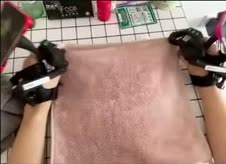
Same visual experience. Richer language supervision.
Fold the pink towel.
Spread and fold the pink towel.
Both hands spread the pink towel, fold it inward, and smooth the edges.
LightingIndoor mixed lighting.
SceneA white checkered tablecloth.
Illustrative captions for the towel clip in the introduction video; not the verbatim examples in Table 2.
Detailed subtask descriptions with environment information achieve 55.04% Hard success. Aligned descriptions outperform shuffled descriptions (53.52% vs. 52.00%).
| Granularity | Setting | Easy (C2C) ↑ | Hard (C2R) ↑ |
|---|---|---|---|
| Caption design | |||
| Episode | Brief | 81.36 | 44.96 |
| Episode | Detailed | 82.00 | 51.60 |
| Subtask | Brief | 83.60 | 47.20 |
| Subtask | Medium | 82.08 | 49.60 |
| Subtask | Detailed | 83.68 | 53.52 |
| Subtask | Detailed + Env. | 83.92 | 55.04 |
| Temporal alignment | |||
| Subtask | Aligned | 83.68 | 53.52 |
| Subtask | Shuffled | 83.04 | 52.00 |
Success rate (%). All settings use 20k pretraining steps. Table 3 in the paper ↗
Paired actions from human manipulation experience provide effective supervision for robot control.
Table 5 isolates UMI action supervision. All UMI videos are retained. Increasing action-label coverage from 0% to 100% improves Hard SR by 4.56 percentage points under the same pretraining budget. Table 4 separately compares language annotations on robot demonstrations.
| Caption | Easy (C2C) ↑ | Hard (C2R) ↑ |
|---|---|---|
| Original | 84.64 | 50.80 |
| Rephrased | 86.08 | 54.76 |
| Detailed + Env. | 86.48 | 56.16 |
Success rate (%). Robot language supervision. Table 4 in the paper ↗
| Action-label coverage | Easy (C2C) ↑ | Hard (C2R) ↑ |
|---|---|---|
| 0% | 80.96 | 46.72 |
| 25% | 81.44 | 47.76 |
| 50% | 83.28 | 49.92 |
| 75% | 84.08 | 50.16 |
| 100% | 83.28 | 51.28 |
All videos are retained as action-label coverage varies; pretraining budget is fixed. Table 5 in the paper ↗
We separately increase pretraining exposure to general videos (General), egocentric videos (Ego), and UMI data (UMI).
General: add 25k steps before mixed training. Ego: add 20k exposure to UMI-only training. UMI: add 20k exposure to Ego-only training. Training budgets differ; see the full results for intermediate settings.
| Data | Total steps | Easy (C2C) ↑ | Hard (C2R) ↑ |
|---|---|---|---|
| General videos | |||
| UMI/Ego 20k | 20k | 82.64 | 53.84 |
| + General 25k | 45k | 82.64 | 56.48 |
| Egocentric videos | |||
| UMI only | 10k | 83.04 | 49.68 |
| + Ego 10k | 20k | 82.64 | 53.84 |
| + Ego 20k | 30k | 82.32 | 55.60 |
| UMI data | |||
| Ego only | 10k | 79.68 | 42.08 |
| + UMI 10k | 20k | 82.64 | 53.84 |
| + UMI 20k | 30k | 83.60 | 51.20 |
Success rate (%). Source exposure and total training budget both vary in this study. Table 6 in the paper ↗
All three mixed settings achieve higher Hard success rates than training on either source alone.
Ego : UMI sampling ratios, with a fixed 20k-step budget. Equal sampling achieves 53.84% Hard SR, compared with 42.56% for Ego only and 51.28% for UMI only.
| Ego : UMI | Easy (C2C) ↑ | Hard (C2R) ↑ |
|---|---|---|
| 1:0 | 77.04 | 42.56 |
| 2:1 | 82.72 | 52.64 |
| 1:1 | 82.64 | 53.84 |
| 1:2 | 83.20 | 53.28 |
| 0:1 | 83.28 | 51.28 |
Success rate (%). Fixed 20k-step pretraining budget across all five ratios. Table 7 in the paper ↗
These results support conditioning the action branch on language through video features.
Separate video and action feature spaces; retain language conditioning in the video branch. The action branch accesses language information through video features.
| Configuration | Easy (C2C) ↑ | Hard (C2R) ↑ |
|---|---|---|
| Architecture | ||
| Single-stream | 86.48 | 52.56 |
| Dual-stream | 84.96 | 52.48 |
| Ours | 84.80 | 57.36 |
| Extra features | ||
| Native | 83.44 | 49.52 |
| + CLIP | 82.40 | 42.48 |
| + DINOv2 | 82.00 | 39.76 |
| + SigLIP2 | 82.40 | 42.40 |
| + Qwen3-VL | 81.60 | 42.96 |
Success rate (%). Architecture: 30k pretraining steps. Extra features: 20k pretraining steps with equal Ego–UMI sampling. These are separate comparison groups. Table 8 in the paper ↗
Increasing pretraining investment in multisource experience provides a stronger WAM.
We compare 0–90k training video hours of Ego/UMI pretraining with equal sampling weights. In RoboTwin simulation, each checkpoint is post-trained for 20k steps on 50 Clean tasks and tested under Easy and Hard conditions. On real robots, each checkpoint receives 50k steps of task-specific post-training; Hard SR and PSR are averaged across three tasks.
Figure 6. Scaling pretraining improves control generalization. Figure 6 in the paper ↗
| Stage 1 | Stage 2 | Easy | Background | Lighting | Clutter | Height | Hard |
|---|---|---|---|---|---|---|---|
| 0k | 0k | 76.16 | 59.12 | 76.24 | 51.28 | 57.68 | 34.56 |
| 20k | 0k | 82.64 | 72.16 | 84.08 | 68.56 | 70.32 | 53.84 |
| 75k | 0k | 85.68 | 77.92 | 85.60 | 78.48 | 75.44 | 59.60 |
| 75k | 25k | 88.08 | 82.16 | 88.08 | 80.72 | 76.96 | 61.52 |
Stage 1: Ego/UMI; Stage 2: robot data. Ablation evaluation uses 25 episodes per task and setting; main results in Table 10 use 100. Table 9 retains 88.08% Easy and 61.52% Hard. Table 9 in the paper ↗
In RoboTwin, post-train on Clean demonstrations and test in clean and randomized scenes.
We study transfer across 50 RoboTwin tasks and three real-world tasks.
SWAM: 75k Ego/UMI + 25k robot pretraining, followed by Clean-only post-training.
+12.86 percentage points over OpenWAM under Hard conditions.
Cup stacking, towel folding, and gift-in-box on a bimanual Flexiv platform.
30 trials per task and condition, averaged equally across tasks.
SWAM generalizes learned manipulation skills to new objects and scene conditions.
We demonstrate this across cup stacking, towel folding, and pick-and-place.
Multi-colored cups · Patterned tablecloth
Striped towel · Illustrated tablecloth
New objects + visual distractors · Cherries + Orange → Blocks into box
Real-world rollouts from the head camera.
Cup stacking, towel folding, and pick and place · 3× playback.
Recorded executions, not model-predicted video. Easy and Hard denote the evaluation conditions; captions describe the visible scene.